It was a moment for the history books: The Artemis II mission performed its much anticipated lunar flyby yesterday, and came within just 4,067 miles of the moon.
While soaring aboard their Orion capsule beyond the far side of the moon, the crew also reached an estimated 252,756 miles from Earth, breaking Apollo 13’s record for the farthest humans have traveled into space.
The flyby lasted seven hours, during which the astronauts could enjoy views of the lunar surface previously unseen by human eyes, with about 21% of the moon’s mysterious far side illuminated by the sun from the crew’s perspective.
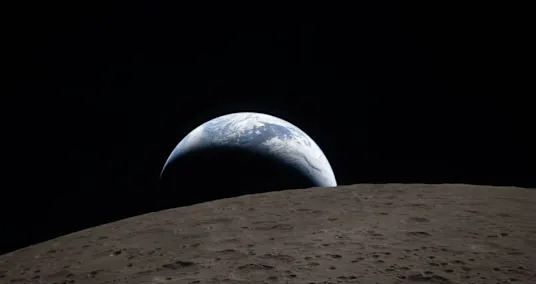
Communications stopped for about 40 minutes during Orion’s transit behind the moon. The crewmembers saw Earth appear to set behind the moon, not dissimilar to what the Apollo astronauts witnessed in 1968. They were also treated to a very special solar eclipse.

After the flyby, Artemis II Commander Reid Wiseman thanked the NASA science team for putting together such an exciting observing program for them, as well as “some great, truly human experience moments here.”
“We were well prepared, and we appreciate all of you, and this is what we do best when we all come together and work as a team,” Wiseman said. “So y’all knocked it out of the park. Thank you for giving us this opportunity.”
Science officer Dr. Kelsey Young shared these comments with the crew: “I can’t say enough how much science we’ve already learned and how much inspiration you’ve provided to our entire team, the lunar science community and the entire world with what you were able to bring today. You really brought the moon closer for us today. And we cannot say thank you enough.”
The crew took thousands of photos that will help inform scientists’ understanding of the moon and its origins — and lay the groundwork for future missions to the lunar surface.
unknown content item
-
“You know from your experience of seeing the Earth from space how it just seems different,” said Canadian Space Agency astronaut Jeremy Hansen, while speaking with NASA Administrator Jared Isaacman about the flyby.
“When we were on the far side of the moon, looking back at Earth, you really felt like you weren’t in a capsule. You’d been transported to the far side of the moon. And it really just bent your mind. It was an extraordinary human experience. We’re so grateful for it.”
For more CNN news and newsletters create an account at CNN.com
LATEST POSTS
- 1
 Eat Well, Live Well: An Extensive Manual for Smart dieting and Sustenance
 - 2A definitive Manual for the 5 Off-road Bicycles Available
- 3Olivia Rodrigo announces 3rd album, 'You Seem Pretty Sad for a Girl So in Love,' set to debut in June
- 4Find the Advantages of Careful Eating: Developing a Sound Connection with Food
- 5Gulf of Mexico oil spill spread hundreds of miles, killed wildlife and polluted Mexican reserves





- Outer space conditions hamper sperm's ability to navigate toward an egg
- Mysterious bright blue cosmic blasts triggered by black holes shredding stars, scientists say. 'It's definitely not just an exploding star.'
- Watch comet C/2026 A1 plunge toward the sun online this week
- Remote Headphones: Upgrade Your Sound Insight
- IDF bans Android phones for senior officers, iPhones now mandatory, Army Radio reports
- Mars spacecraft images pinpoint comet 3I/ATLAS's path with 10x higher accuracy. This could help us protect Earth someday
- Merck urges science-led US vaccine schedule after CDC trims childhood vaccine list
- Your guide to how to safely thaw and cook your Thanksgiving turkey this year, according to experts
- The most effective method to Refresh the Infotainment Framework in the Volvo XC40