MOSCOW (Reuters) -A Russian Soyuz MS-28 spacecraft with two Russian cosmonauts and one NASA astronaut on board successfully docked with the International Space Station on Thursday, Russian space agency Roscosmos said.
But the agency later reported that the launch pad at the Baikonur Cosmodrome in Kazakhstan had sustained damage from the launch. It said the damage would be quickly repaired.
The Soyuz 2.1a rocket lifted off from the Baikonur Cosmodrome at 12:28 p.m. Moscow time (0928 GMT).
Late on Thursday, Russian news agencies quoted Roscosmos as saying the launch had taken place without incident, but damage was observed after an inspection of the launch area.
"Damage to a number of elements of the launch pad was detected. An assessment of the state of the launch complex is being conducted now," the agencies quoted Roscosmos as saying.
"All the necessary reserve elements are there to restore it and the damage will be eliminated very soon."
It said the crew was on board the station and in good health.
(Reporting by Anastasia Lyrchikova; Writing by Marina Bobrova; Editing by Andrew Osborn, Ron Popeski and Bill Berkrot)
LATEST POSTS
- 1
 Computerized Moderation: Tracking down Equilibrium in the Advanced Age
 - 2This professional Santa's dream of spreading holiday cheer fuels stroke recovery
- 3She loves to give experiences. He goes for sentimental gifts. They ask an expert: What is the perfect holiday present?
- 4NASA funds new tech for upcoming 'Super Hubble' to search for alien life: 'We intend to move with urgency'
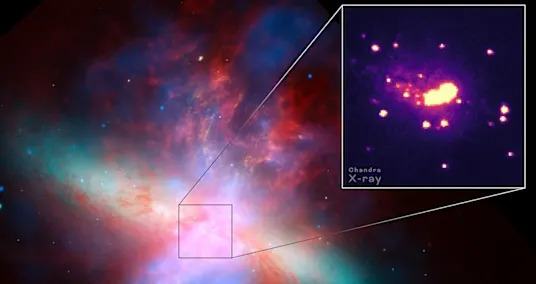
- 5This star-forming galaxy is blowing out powerful winds topping 2 million mph


- Family Holiday spots
- The most effective method to Safeguard Your Teeth from Acidic Food varieties and Beverages
- One perk to marrying Richard Marx later in life? 'We don't have time' for stupid arguments, says Daisy Fuentes.
- Interstellar comet 3I/ATLAS isn't an alien spacecraft, astronomers confirm. 'In the end, there were no surprises.'
- The next frontier in space is closer than you think – welcome to the world of very low Earth orbit satellites
- 19 Strange Motion pictures You Shouldn't Watch With Your Mum
- 7 Espresso Machines for Home Baristas
- The Most Vital Crossroads in Olympic History
- Russian military plane crashes in annexed Crimea, killing 29 people on board